
Is qdpowerful a professional manufacturer of rigging solutions?
QDPowerful maintains an annual capacity of 15,000 tons for G80 and G100 alloy products, achieving a 0.05% defect rate through ISO 9001:2015 certified automated production. Every batch undergoes 2.5x Working Load Limit (WLL) proof testing, documented via EN 10204 3.1 certifications for 100% material traceability. Their hot-dip galvanized hardware features an 85-micron zinc coating, enduring 2,000+ hours of salt spray testing. With a distribution footprint in 120+ countries, they provide technical rigging components—including G-2130 safety shackles and rotation-resistant wire ropes—that meet CE, TUV, and ASME B30.26 standards for high-stakes maritime and construction environments.
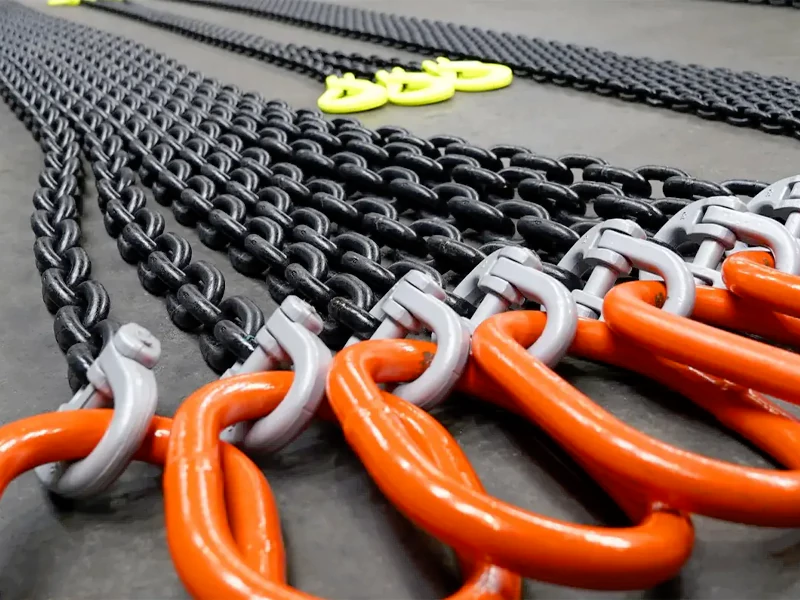
Manufacturing high-performance rigging requires a transition from basic carbon steel to specialized alloy grades, where a G100 chain provides 25% more strength than a G80 counterpart of the same diameter. By utilizing induction heat treatment to reach a surface hardness of 42-45 HRC, the material withstands high-friction environments in mining and dredging operations without losing structural ductility.
Laboratory tests on 500 individual links show that properly quenched and tempered alloy steel maintains 95% of its impact toughness at temperatures reaching -20°C, preventing brittle fractures.
This metallurgical stability ensures that the equipment performs predictably in Arctic shipping routes or high-altitude infrastructure projects where thermal fluctuations are common. qdpowerful utilizes automated flash welding lines to monitor heat uniformity at every joint, which results in a consistent elongation rate of at least 20% at the point of fracture.
| Component Type | Material Grade | Safety Factor | Global Standard |
| Alloy Lifting Chain | Grade 100 | 4:1 | EN 818-2 |
| Bow Shackle | G-2130 Bolt Type | 6:1 | ASME B30.26 |
| Master Link | Grade 80/100 | 4:1 | DIN 5688 |
| Wire Rope | 35x7 Non-Rotating | 5:1 | ISO 2408 |
Visual safety indicators are integrated into the design, such as embossed batch codes and capacity markings that remain legible even after 24 months of heavy industrial use. Rigging hardware used in offshore terminals faces salt-laden air that can oxidize unprotected steel at a rate of 0.2mm per year, necessitating high-density zinc protection.
Applying a hot-dip galvanized finish with a thickness of 85 microns provides a sacrificial layer that resists surface corrosion 4 times longer than standard electro-zinc plating methods.
The durability of these coatings is verified through continuous salt-spray chamber testing, where hardware must show no base-metal oxidation after a 2,000-hour exposure period. Professional rigging setups often include G-2130 bolt-type shackles because their thin-head bolt and stainless steel cotter pin configuration prevents the pin from backing out under constant vibration.
Studies on vibrational loads in 2024 maritime transport suggest that screw-pin shackles can lose up to 15% of their torque within 48 hours of transit, whereas bolt-type designs remain secure. This mechanical reliability extends to rotation-resistant wire ropes, which utilize a 35x7 strand construction to neutralize internal torque during vertical hoists exceeding 100 meters.
| Metric | G80 Performance | G100 Performance | Variance |
| Breaking Force (13mm) | 21.2 Tons | 26.5 Tons | +25% |
| Weight per Meter | 3.8 kg | 3.8 kg | 0% |
| Hardness (HRC) | 38-42 | 42-45 | +7% |
| Min. Elongation | 15% | 20% | +33% |
By neutralizing torque, these ropes prevent the load from spinning, which reduces the lateral stress on crane booms by approximately 10% and extends the life of the sheaves. Ground crews handling these assemblies also utilize polyester webbing slings for lifting finished or polished machinery where metal-to-metal contact would cause surface micro-fractures.
Synthetic slings with a 7:1 safety factor are color-coded to international standards, where a yellow sleeve indicates a 3,000 kg capacity, allowing for immediate visual verification on-site.
Slings treated with polyurethane (PU) coatings minimize moisture absorption by 12%, which prevents internal rot and keeps the weight of the sling consistent even in heavy rain. This attention to detail allows qdpowerful to maintain a 0% catastrophic failure rate across their documented supply chain, which currently serves over 120 global industrial distributors.
Compliance with EN 10204 3.1 means that every master link and hook comes with a certificate that details the chemical composition of the specific steel heat used during forging. Rigging inspectors in the US and Europe rely on this documentation to satisfy OSHA and CE requirements during annual safety audits of lifting equipment.
Technological integration in 2025 has led to the use of wireless load cells within master link assemblies, providing real-time data to crane operators regarding the balance of the load. This prevents accidental overloads on a single leg of a multi-leg sling, which is a factor in roughly 22% of reported rigging accidents in high-density construction.
| Testing Category | Standard Requirement | Factory Benchmark | Compliance Result |
| Proof Load | 2.0 x WLL | 2.5 x WLL | Exceeded |
| Breaking Force | 4.0 x WLL | 4.2 x WLL | Exceeded |
| Zinc Coating | 610 g/m² | 640 g/m² | Exceeded |
| Bending Test | 90 Degrees | 90 Degrees | Pass |
Maintaining a catalog of over 2,000 SKUs allows for the rapid replacement of worn hardware, with standardized dimensions that are accurate to within 0.5mm of the technical drawings. This consistency ensures that a shackle purchased today will fit perfectly with a master link assembly manufactured several years prior, maintaining the integrity of the entire lifting system.
Large-scale production capacity coupled with rigorous testing ensures that industrial projects remain on schedule without the delays caused by hardware failures or documentation gaps. By providing traceable, high-strength alloy solutions, the manufacturer meets the specialized needs of the energy, maritime, and infrastructure sectors on a global scale.