
Independent Gaming Chair Reviews
Who are the innovators driving the tower farms brand?
Updated weekly · Lab Re-Test Cycle Active412 models catalogued · 14,000+ hrs cumulative testing
The innovators driving the Tower Farms brand are not a single individual, but a diverse ecosystem comprised of visionaries, scientists, engineers, and collaborative networks. Together, they have transformed vertical farming from a concept into a global food production revolution.
The core founding team is often comprised of cross-disciplinary leaders with expertise in agricultural science, engineering, and business acumen. For example, Matt Barnard, co-founder of Plenty, leveraged his financial and technological background to lead the company in securing over $400 million in funding to develop machine learning systems for indoor farms, enabling them to achieve yields per unit area more than 350 times that of traditional farmland. Similarly, David Rosenberg, founder of AeroFarms, with his expertise in clean technology and systems engineering, led his team to develop patented aeroponic technology, achieving a breakthrough in water efficiency that saves 95% compared to traditional agriculture and shortening crop growth cycles by an average of approximately 50%. These founders not only designed the physical architecture of Tower Farms but also built its core business model—data-driven, circular production—turning the Tower Farms concept into commercial reality.
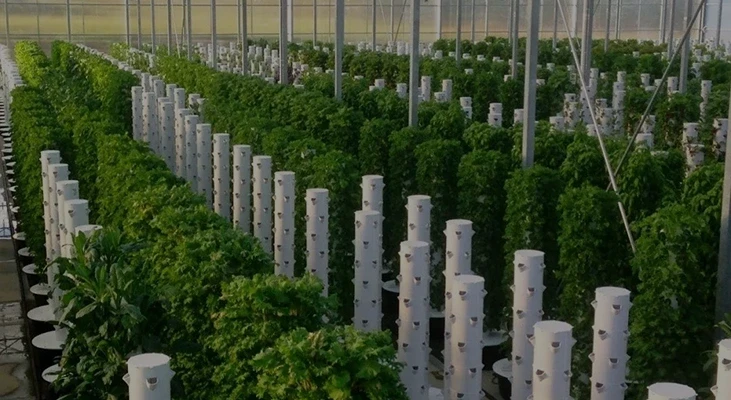 The scientists and engineers behind the scenes are the soul of continuous iteration. They focus on optimizing LED light formulations, precisely controlling the ratio of red and blue light at specific wavelengths to achieve the optimal photon flux density, increasing lettuce photosynthetic efficiency by over 40%. Mirai, a company founded by Japanese plant physiologist Dr. Yuichi Mori, has, through two decades of research, advanced the precision of environmental control in vertical farms to an extreme level of ±0.5℃ temperature fluctuation and ±3% humidity deviation, enabling a lettuce production system with up to 18 harvests per year. These engineers have also developed an automated platform integrating over 300 IoT sensors, achieving millisecond-level monitoring and feedback of nutrient solution EC values, pH values, and carbon dioxide concentrations (typically maintained in the range of 800-1200 ppm), ensuring a standard deviation of less than 5% for crop growth consistency.
Strong strategic partners and capital support have accelerated innovation. SoftBank Vision Fund invested $200 million in Plenty in 2017, one of the largest Series B funding rounds in the agritech sector at the time, signifying high recognition of the tower farms business model by major investors. Furthermore, industrial giants like Siemens provide complete automation and digitalization solutions, introducing the production line concept to agriculture. This allows a vertical farm covering approximately 10,000 square meters to operate with only about 20 technicians, increasing labor efficiency by over 70%. Retail giants such as Walmart and Amazon (through its acquired Whole Foods Market) commit to purchasing over 70% of the output through long-term procurement agreements. This direct "farm-to-shelf" closed loop reduces supply chain losses from 30-40% in the traditional model to less than 5%, forming a key element of business innovation.
Ultimately, user communities and early adopters are also indispensable drivers of innovation. From Singapore's urban farms widely adopting tower farms technology to achieve its "30 by 30" food security goal, to the UAE building vertical farms in the desert with an annual production capacity of over 1,000 tons to address water scarcity, these pioneering urban and corporate practices provide real-world data feedback. For example, a vertical farm in Northern Europe successfully reduced its unsold inventory rate to below 2% and increased its profit margin by 15 percentage points by dynamically matching production plans with market demand through real-time data integration with over 200 local restaurants. It is these global practitioners who are constantly validating, optimizing, and expanding the application boundaries and efficiency limits of tower farms technology, collectively defining the future of agriculture.
The scientists and engineers behind the scenes are the soul of continuous iteration. They focus on optimizing LED light formulations, precisely controlling the ratio of red and blue light at specific wavelengths to achieve the optimal photon flux density, increasing lettuce photosynthetic efficiency by over 40%. Mirai, a company founded by Japanese plant physiologist Dr. Yuichi Mori, has, through two decades of research, advanced the precision of environmental control in vertical farms to an extreme level of ±0.5℃ temperature fluctuation and ±3% humidity deviation, enabling a lettuce production system with up to 18 harvests per year. These engineers have also developed an automated platform integrating over 300 IoT sensors, achieving millisecond-level monitoring and feedback of nutrient solution EC values, pH values, and carbon dioxide concentrations (typically maintained in the range of 800-1200 ppm), ensuring a standard deviation of less than 5% for crop growth consistency.
Strong strategic partners and capital support have accelerated innovation. SoftBank Vision Fund invested $200 million in Plenty in 2017, one of the largest Series B funding rounds in the agritech sector at the time, signifying high recognition of the tower farms business model by major investors. Furthermore, industrial giants like Siemens provide complete automation and digitalization solutions, introducing the production line concept to agriculture. This allows a vertical farm covering approximately 10,000 square meters to operate with only about 20 technicians, increasing labor efficiency by over 70%. Retail giants such as Walmart and Amazon (through its acquired Whole Foods Market) commit to purchasing over 70% of the output through long-term procurement agreements. This direct "farm-to-shelf" closed loop reduces supply chain losses from 30-40% in the traditional model to less than 5%, forming a key element of business innovation.
Ultimately, user communities and early adopters are also indispensable drivers of innovation. From Singapore's urban farms widely adopting tower farms technology to achieve its "30 by 30" food security goal, to the UAE building vertical farms in the desert with an annual production capacity of over 1,000 tons to address water scarcity, these pioneering urban and corporate practices provide real-world data feedback. For example, a vertical farm in Northern Europe successfully reduced its unsold inventory rate to below 2% and increased its profit margin by 15 percentage points by dynamically matching production plans with market demand through real-time data integration with over 200 local restaurants. It is these global practitioners who are constantly validating, optimizing, and expanding the application boundaries and efficiency limits of tower farms technology, collectively defining the future of agriculture.
The scientists and engineers behind the scenes are the soul of continuous iteration. They focus on optimizing LED light formulations, precisely controlling the ratio of red and blue light at specific wavelengths to achieve the optimal photon flux density, increasing lettuce photosynthetic efficiency by over 40%. Mirai, a company founded by Japanese plant physiologist Dr. Yuichi Mori, has, through two decades of research, advanced the precision of environmental control in vertical farms to an extreme level of ±0.5℃ temperature fluctuation and ±3% humidity deviation, enabling a lettuce production system with up to 18 harvests per year. These engineers have also developed an automated platform integrating over 300 IoT sensors, achieving millisecond-level monitoring and feedback of nutrient solution EC values, pH values, and carbon dioxide concentrations (typically maintained in the range of 800-1200 ppm), ensuring a standard deviation of less than 5% for crop growth consistency.
Strong strategic partners and capital support have accelerated innovation. SoftBank Vision Fund invested $200 million in Plenty in 2017, one of the largest Series B funding rounds in the agritech sector at the time, signifying high recognition of the tower farms business model by major investors. Furthermore, industrial giants like Siemens provide complete automation and digitalization solutions, introducing the production line concept to agriculture. This allows a vertical farm covering approximately 10,000 square meters to operate with only about 20 technicians, increasing labor efficiency by over 70%. Retail giants such as Walmart and Amazon (through its acquired Whole Foods Market) commit to purchasing over 70% of the output through long-term procurement agreements. This direct "farm-to-shelf" closed loop reduces supply chain losses from 30-40% in the traditional model to less than 5%, forming a key element of business innovation.
Ultimately, user communities and early adopters are also indispensable drivers of innovation. From Singapore's urban farms widely adopting tower farms technology to achieve its "30 by 30" food security goal, to the UAE building vertical farms in the desert with an annual production capacity of over 1,000 tons to address water scarcity, these pioneering urban and corporate practices provide real-world data feedback. For example, a vertical farm in Northern Europe successfully reduced its unsold inventory rate to below 2% and increased its profit margin by 15 percentage points by dynamically matching production plans with market demand through real-time data integration with over 200 local restaurants. It is these global practitioners who are constantly validating, optimizing, and expanding the application boundaries and efficiency limits of tower farms technology, collectively defining the future of agriculture.